
If the new MDR regime is rolled out from the middle of this month, as scheduled, it should count as one of the boldest political actions by the Modi government on an economic-policy issue, and a signal that it is less worried about erosion of political capital it draws from one of its key constituencies, notes A K Bhattacharya.

India's markets regulator Sebi has launched 'Demat 2.0', a pilot project for tokenisation of corporate bonds, enabling atomic settlement through integration with RBI's wholesale CBDC. This new market infrastructure uses Distributed Ledger Technology (DLT) to make bond issuance, trading, and settlement faster and more efficient. India is the first country to issue corporate bonds natively on a distributed ledger with central bank digital currency settlement. Additionally, RBI Governor announced new UPI innovations: 'Tap & Pay' for faster POS transactions and MyUPI, an AI-powered customer support solution.

Sources clarify that the NCLT's approval of a repayment plan for Essel Group founder Subhash Chandra does not signify a 99.97 per cent write-off of Rs 22,000 crore in bank loans, as the figure represents claims against him as a personal guarantor, not debt personally borrowed.

NPCI chief Dilip Asbe stated that only about 10 per cent of the total value of UPI transactions might see charges passed to consumers under the merchant discount rate (MDR). He clarified that large corporates are expected to absorb most costs, and a significant portion of transactions will remain charge-free. A new fund from MDR collection is also proposed to boost UPI acceptance among small merchants.

NPCI chief Dilip Asbe stated that only about 10% of UPI transaction value might see charges passed to consumers, primarily from large corporates already absorbing credit card fees. He highlighted that 80% of Merchant Discount Rate (MDR) would come from businesses with over Rs 1,000 crore turnover, and a significant portion of transactions will remain charge-free. A new fund, potentially Rs 3,000 crore, will also be created from MDR collection to support small merchants and accelerate UPI acceptance.

Merchants will be subject to an 18 per cent Goods and Services Tax (GST) on the Merchant Discount Rate (MDR) for UPI payments exceeding Rs 2,000, but can mitigate this burden by claiming input tax credit (ITC), according to tax experts.

Tax experts clarify that merchants will pay 18% GST on Merchant Discount Rate (MDR) for UPI payments exceeding Rs 2,000, effective October 15. However, registered merchants can claim Input Tax Credit (ITC), mitigating the tax burden. This move is expected to generate significant GST revenue for the exchequer while funding payment infrastructure.

Currently, only three have completed more than six months of operation in the space - Fino Payments Bank, Airtel Payments Bank and Paytm

India's MSME sector faces a significant formal credit gap of approximately Rs 60 lakh crore, with traditional channels meeting only a fraction of the demand. A new report suggests that a centralised, interoperable digital layer could effectively bridge this gap and enhance productivity across the formal business sector by digitising workflows and enabling cash-flow-based underwriting.

While a wallet is convenient, payments bank offers interest on deposits and ATM facility.
Experts contend that this setback, even if temporary, could put the company at a disadvantage to its competitors in acquiring new customers.

India's economy is projected to lose momentum in the second half of fiscal 2026-27, with tighter financial conditions, elevated energy prices, and broadening inflation pressures posing significant risks, according to DBS Bank economist Radhika Rao.

In August, RBI allowed 11 business houses to start a payments bank.
Samajwadi Party president Akhilesh Yadav has criticised the BJP government's proposed Merchant Discount Rate (MDR) on high-value UPI transactions, calling it a "chungi" (tax) on digital payments. He alleged the move was an attempt to extract money from people's transactions, contradicting the government's goal of a trillion-dollar economy. The new UPI framework will impose a 0.4% MDR on person-to-merchant transactions above Rs 2,000 from October 15, with certain sectors having a flat Rs 5 MDR.

Of the 11 licence holders, only eight remain in the fray as concerns about profitability and rising competition are making them think twice before jumping in.

The Ahmedabad Cyber Crime Branch has arrested two men from Rajasthan for allegedly defrauding people of Rs 8 lakh by selling fake garba event passes during Navratri. The accused used Instagram, forged email IDs, WhatsApp, and AI tools like ChatGPT to create authentic-looking tickets and promotional material, targeting around 40,000 people. They sold 686 bogus passes for various high-end events before being apprehended based on a complaint from a garba organiser.

The Retailers Association of India (RAI) has voiced concerns that the government's new 0.4 per cent Merchant Discount Rate (MDR) on UPI transactions above Rs 2,000 could reverse the progress of digital payment adoption among small retailers. This fee, effective October 15, places the burden on merchants operating on thin margins, potentially pushing them back to cash transactions and undermining the government's formalisation agenda, especially ahead of the festive season.

The Reserve Bank of India has raised the repo rate by 0.25%. Three financial planners explain how soon banks will pass the increased loan interest on, what borrowers should check and what they need to avoid.
India and Nepal have launched a peer-to-peer (P2P) cross-border remittance mechanism, linking India's UPI with Nepal's NPI. This system allows real-time money transfers via mobile banking, enhancing convenience for travellers and businesses, fostering financial inclusion, and strengthening economic ties between the two nations.

"Pressure on the current account is a temporary problem. Sooner rather than later, our external sector will improve," said RBI Governor Sanjay Malhotra.

Artificial intelligence major Anthropic has launched AI inference capabilities in India through Amazon Bedrock, allowing its Claude AI models to process data within the country's jurisdiction. This strategic move addresses the growing demand from Indian entities, particularly in regulated sectors, for compliance with local data processing norms as per the Digital Personal Data Protection Act. The initiative strengthens Anthropic's commitment to the Indian market, enabling secure and compliant AI deployment for sensitive workloads and fostering trust among major enterprises like Reliance, CRED, and NPCI.

The central government has introduced a 0.4 per cent fee on UPI transactions exceeding Rs 2,000, prompting traders' associations to advocate for cash payments to avoid additional costs on digital payments. This move ends the zero-Merchant Discount Rate (MDR) regime, with traders expressing concerns about operating on tight margins and the potential for increased charges.

The Reserve Bank of India's Monetary Policy Committee (MPC) has indicated that rate cuts are improbable in the near term, with headline inflation projected to reach 6 per cent in the third quarter. Minutes from the October meeting reveal growing concerns among members about inflation spreading beyond food and fuel, leading to a shift in policy stance towards calibrated tightening.

Your credit card may have security controls you rarely use. Here are seven settings that can help prevent unwanted or fraudulent transactions.

Jaitley said banking network is expanding hugely and the health of banks reflects on the challenges for the economy.

Reliance Industries Ltd reported a 12.5 per cent fall in its March quarter net profit, primarily impacted by the global energy crisis affecting its oil and chemicals business, while its consumer-facing Jio Platforms unit saw a 13 per cent increase in profit after tax.
Payment banks may not be viable option to attain financial inclusion.
'The Rs 35,000 crore of capex every year, I don't get to sign 35 paise out of this.'

RBI Governor Sanjay Malhotra stated that the central bank consistently views fintechs as 'valuable partners' in shaping India's future financial system, crediting the sector with expanding financial inclusion, enhancing customer experience, and streamlining credit delivery, particularly for MSMEs.

Telecoms investor Aditya Birla Nuvo Ltd and retailer Future Group were among the first big names to apply for licenses to run so-called payments banks

National Investment and Infrastructure Fund Limited (NIIF) has appointed Gauravjit Singh as managing partner to lead its global capital formation efforts. Simultaneously, PB Fintech's payment aggregator platform, PB Pay, has gone live, offering consolidated payment acceptance for merchants. In a move to enhance trade efficiency, the Directorate General of Foreign Trade (DGFT) has introduced open API integration for Certificate of Origin, allowing exporters to streamline their application processes.

SEBI Chairman Tuhin Kanta Pandey stated that the National Stock Exchange (NSE) has not submitted any proposal seeking approval to trade on its own platform after getting listed, and such trading is currently not permitted. He also confirmed that SEBI would examine concerns raised by brokers and asset management companies regarding the new UPI Merchant Discount Rate (MDR) framework.

India's UPI International payment system is now playing a crucial role in humanitarian efforts, enabling seamless disaster relief donations from Indian users to Nepal's Prime Minister Disaster Relief Fund, showcasing its growing global acceptance and utility beyond tourism. UPI IMAGE: Kindly note that this image has been posted for representational purposes only. Photograph: Unsplash Key Points UPI International, initially for Indian tourists, is now facilitating disaster relief donations to Nepal's Prime Minister Disaster Relief Fund. The embassy of Nepal in India is actively encouraging Indian users to utilise their UPI apps for these contributions. This marks a significant shift, expanding UPI's cross-border use case beyond tourism to include inbound collection for foreign governments. The move positions UPI International alongside global payment giants like Alipay+ and UnionPay for international aid. Donors need to activate the UPI International feature on their apps to transact, with amounts converted from INR to NPR.

Bernstein brokerage firm maintains 'Outperform' rating for Paytm, stating the PPBL licence cancellation will not impact Paytm's business and may open new regulatory opportunities.
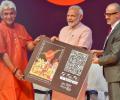
It will carry out most banking operations like accepting deposits but can't advance loans or issue credit cards.

Regulators will need to allow the model to evolve to allow profits to flow, says Una Gulani.

Former Haryana Chief Minister Bhupinder Singh Hooda has criticised the newly introduced fees on UPI payments, stating they will lead to increased inflation for the common man. He dismissed government claims that customers would not be burdened, arguing that merchants would pass on the costs. Hooda demanded the immediate withdrawal of these fees, highlighting that the government's move contradicts its 'Digital India' initiative.

Madhya Pradesh Deputy Chief Minister Jagdish Devda removed his Officer on Special Duty (OSD), Deepam Raichura, following allegations of accepting a Rs 1 crore bribe related to liquor contracts in Bhopal. The allegations were made by Mohit Gogiya, an accused in a large fraud case, who claimed Raichura facilitated liquor contracts and helped secure a fake bank guarantee. Devda has ordered a probe into the matter.

Deferred payment plans may come with a cost, which may not be immediately visible.
Fintech giant One97 Communications, which operates Paytm, has decided against applying for a Non-Banking Financial Company (NBFC) licence, favouring its existing partnership model.
